Many people are relatively familiar with the fact that there are 3 major expressions of prayer which form a kind of a ladder toward God: vocal, meditative, and contemplative prayer.
They're right in the Catechism.
What many people don’t know is that the Doctor of Prayer, St. Teresa of Avila, broke these levels of prayer down even further.
And while she didn’t formally lay them out in an exact manner, later commentators on her work identify nine different grades of prayer she discusses that describe what a person experiences as they make their way toward God.
And since prayer is such a massive part of Lent (not to mention every other day of the year), I thought it might be interesting to see how the master of prayer describes these stages.
St. Teresa's 9 Grades of Prayer are:
1. Vocal
2. Meditation
3. Affective Prayer
4. The Prayer of Simplicity
5. Infused Contemplation
6. The Prayer of Quiet
7. Prayer of Union
8. Prayer of Conforming Union
9. Prayer of Transforming Union
So let’s start by breaking this list into two main sections.
The first four grades of prayer consist of vocal prayers and different levels of meditation.
They also comprise what we call the “ascetical” stage of the spiritual life. In other words, we’re talking about the more “ordinary” phase of the spiritual life which focus on the basics of the spiritual life.
In this initial stage, there’s a sense in which we’re more active. We’re more the impetus, so to speak, behind our movement in prayer. We speak, read, reflect, meditate, etc…. While everything is ultimately a matter of grace, we’re making an act of the will and moving into prayer.
The remaining five grades of prayer are different levels of contemplative prayer and mark the soul’s entrance into the more “mystical” phase of the spiritual life. All of these grades of prayer are dictated by God. He is the impetus and we cannot make them happen. We can only receive them. They are what we call “infused” prayer.
So let’s do a quick run-through of these different grades from a high level.
1. Vocal Prayer
Vocal prayer is the foundation of our communication with the Lord. Because we’re a union of body and soul (i.e. not pure spirits) vocal prayers give us the ability to express interior devotion externally. The Catechism of the Catholic Church (n. 2701) says that we never leave vocal prayer completely behind, no matter how high up the ladder we move toward God.
2. Meditation
Meditative prayer is a silent, interior conversation with God typically aided by some kind of physical input (e.g. books, art, or even nature). These physical aids inspire reflection on God and are our “part” in the interior conversation with our Lord.
For example, you slowly read a passage of Scripture, which begins an interior conversation with the Lord when something strikes you from the reading.
3. Affective Prayer
Affective prayer is a slightly more “intense” or higher level of meditation. It’s when you first begin to pause your meditation and begin to simply “love” God.
For example, let’s say you’re engaged in meditation on the Passion of our Lord in Scripture, and the details of his scourging cause a great sentiment of love to well up inside of you. Affective prayer is when you make an act of the will and give yourself over to this movement of love and just revel in it. It’s basically a simplified form of meditative prayer.
4. The Prayer of Simplicity
As the name suggests, the Prayer of Simplicity is an even more simplified version of meditative prayer. In Affective prayer, we experienced little movements of love which we made an act of the will to follow.
In the Prayer of Simplicity, it’s not just our will that goes into action. Our intellect is now unified with our will, so that we can bring even more interior focus on the Lord. In other words, we’re able to gather more of ourselves together to focus more intently on God in a simplified gaze of love.
5. Infused Contemplation
With infused contemplation, we move from ascetical prayer into mystical prayer - the type of prayer that we can’t enter into on our own. Only God can give us the gift of infused prayer - and there’s a real sense in which what we begin to experience in this form of prayer are little tastes of heaven. Infused contemplation is a deeper, more profound experience of God himself.
6. The Prayer of Quiet
The great 20th century Dominican, Fr. Jordan Aumann, defines the Prayer of Quiet as follows: “The Prayer of Quiet is a type of mystical prayer in which the intimate awareness of God’s presence captivates the will and fills the soul and body with ineffable sweetness and delight.”
It’s another step deeper into infused contemplation, focusing again on captivating our will first, and in a later stage, our intellect - but still leaving our memory and imagination free to roam.
7. Prayer of Union
Fr. Aumann says that “in the Prayer of Union all the interior faculties, including the memory and imagination, are captivated. Only the external bodily senses are now free.”
So basically, God is continuing to take over - to unite himself to us. And even though we can still see, hear, and feel, Fr. Aumann says that “without being entirely captivated, the external senses become almost helpless and inoperative. The soul experiences divine reality with such intensity that it could easily fall into ecstasy.”
8. Prayer of Conforming Union
In the Prayer of Conforming Union (which St. Teresa calls “Spiritual Betrothal”), God takes over completely. He brings both internal and external faculties and senses under his control, showing us visions and leading us into ecstasies. This is the stage at which we are in final preparation for complete union with Our Lord. In fact, Fr. Aumann says that in this stage, the soul is already divinized, though St. Teresa warns that we’re never totally safe.
9. Prayer of Transforming Union
The final grade is the Prayer of Transforming Union, which Teresa calls “Spiritual Marriage". And while the lines between these highest grades of prayer may often seem a little blurry, she explains that this level is far beyond all previous. It is truly a foretaste of heaven and a prelude to the Beatific Vision itself.
Transforming Union is the highest degree of perfection that a person can attain on this side of heaven. In other words, the veil of heaven has grown wisp-thin. We’re so united with the Lord that we’re beginning to taste eternity.
So there you have it. The nine grades of prayer. Granted, these are very brief descriptions of the different levels. The point of laying them out is to show that prayer is far deeper and richer than most people realize.
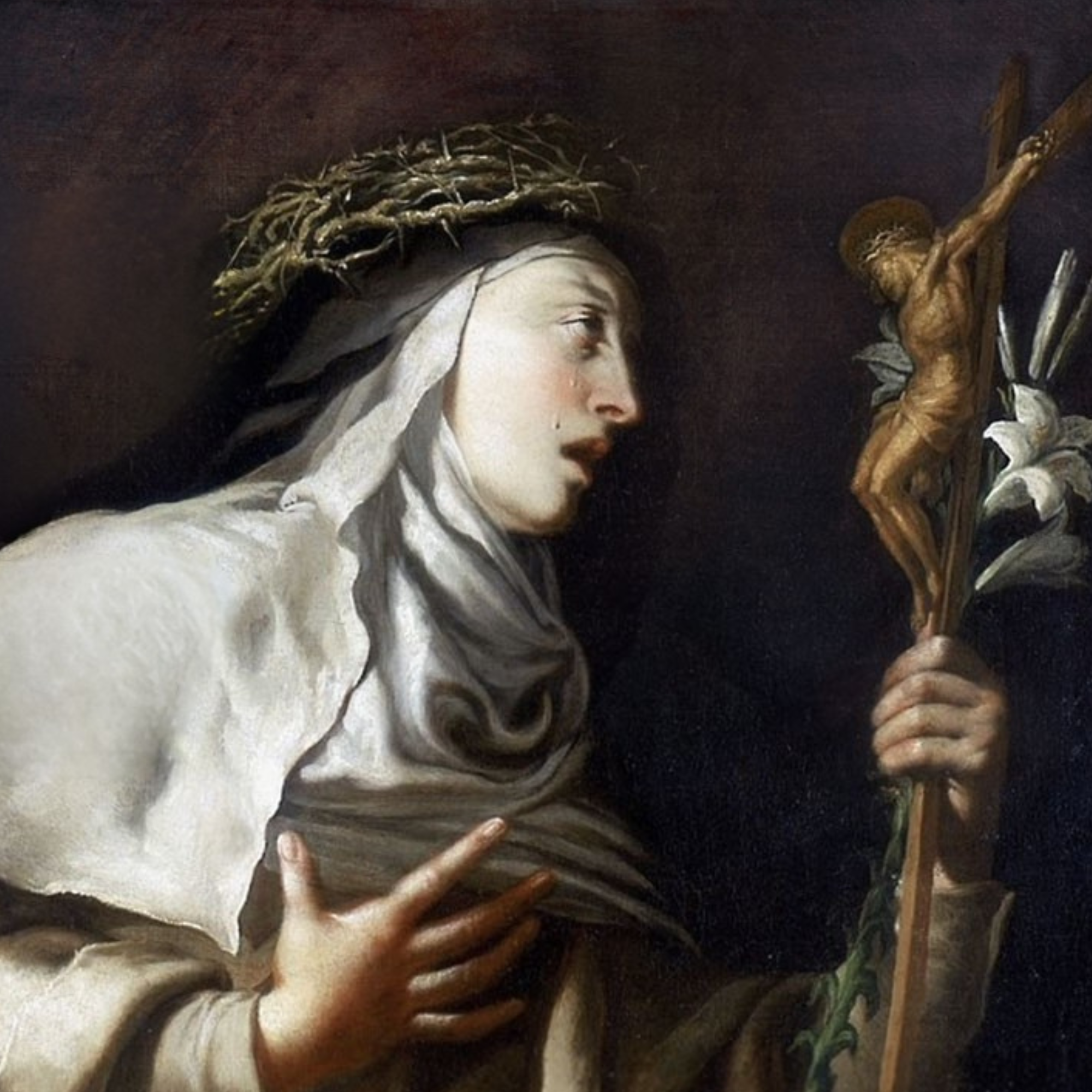
In fact, it’s literally a movement into the Divine that caused St. Teresa to cry out in the midst of her descriptions, “O my Lord, how good Thou art! Blessed be Thou for ever! Let all things praise Thee, my God, Who hast so loved us that we can truly say that Thou has communication with souls even in this exile.”
And just as a reminder, this Lent we’re going to work our way through the Science of Sainthood study, St. Teresa of Avila’s Nine Grades of Prayer in conjunction with a prayer challenge.
In fact, we’re actually going to begin the Monday before Ash Wednesday.
Regardless, don’t ever stop praying and seeking the Lord!
God bless,
Matthew
P.S. Our Marian pilgrimage to Fatima, Spain, & Lourdes is NEXT MONTH! CLICK HERE to sign up for one of the last few remaining spots!