
Episode Transcript:
Welcome to the Art of Catholic podcast. Thanks so much for joining me. On this episode I want to address a very important question that I often get asked.
I just finished a bunch of Lenten travel in which I was criss-crossing the country and then went on an incredible pilgrimage to Fatima, Spain, and Lourdes with a great group of people.
And all of the parishes, galas, conferences, and the pilgrimage I went to were full of beautiful Catholics really wanting to learn and grow in their faith.
But there's always a recurring question that comes up. Namely, what to do when we have a spouse, child, brother, sister, friend, or whomever that has left the faith.
Check out Course #1 in the Science of Sainthood -
Introduction to Real Prayer for FREE!
Check it out HERE!
This is something all of us deal with in some way, shape or form.
And it's heartbreaking because there is often a large feeling of personal guilt involved in the people who ask because lots of time they weren't living the faith very well when raising their children, for example, and are now anguishing over how their lack of practicing the faith led to their children's spiritual apathy.
And that's a hard pill to swallow, particularly as a parent.
Of course, the elephant in the room is that many Catholics simply were not properly catechized over the last couple of generations. They didn't know their faith and so weren't living it properly
That's not an excuse, but it's true.
But once people rediscover the truth, beauty, and goodness of the Catholic faith, they're like - "Why wasn't I ever taught this?" "How come I didn't know this?" And lots of times it can even lead to some anger over what was missed in their formation.
And again, it's not like there's zero culpability for the individual.
The resources have always been there.
And a lot of people have been living the faith their entire lives. They have been faithful to the teachings of the Church in spite of what instruction they may or may not have received in their parish or Catholic school.
But we have to recognize that a lot of people simply were not taught the faith - particularly, I would say, the ins-and-outs of real Catholic prayer and the spiritual life.
I mean, seriously, how many people know were ever taught how to actually practice authentic Catholic meditation or understand true contemplative prayer? How many even know the basic forms of prayer in the Catechism?
We learn the Our Father and Hail Mary. We may even have memorized the Memorare and can recite a litany or two. But a real interior life? A real focus on serious relationship with the Lord? I'm sad to say that that's pretty rare, even today.
For too long, the focus has just been somewhat juvenile sacramental prep and moving kids and adults along through the baptism, confession, first communion, confirmation assembly line. That has to change.
All I have is personal and anecdotal information from people running OCIA programs around the United States, but it appears that while a lot of people come into the Church, a large number of them fall away rather quickly.
And I think a huge part of the reason is because we don't focus enough upon, and show, how all the graces that come through the sacraments are meant to drive a real interior relationship with the Lord.
We need to teach candidates and catechumens to really pray. We need to show them the path of holiness and that the sacraments of initiation are just that - initiation - that they are just the beginning of movement toward divine life, a movement toward literal sainthood.
That's why I started the Science of Sainthood.
As I tell people all the time, I stole that title from St. Augustine who talks about the "science of saints" and St. Catherine of Siena who speaks of the "holy science" of love.
There is so much more to our growth in holiness than just receiving the sacraments. There is a path of development that we have to engage or all that grace in the sacraments is going to be wasted.
That's why Christ calls the spiritual life - growing in intimacy with him - the "one thing necessary" in Luke 10:42. Because if we don't really have a relationship with the Lord, we're in a heap of trouble.
And it's not just about the end of our lives when we're standing in front of him. It's about our lives now! Why wouldn't we want a relationship with the Person who made us and loves us more than anyone else?
Not really focusing on our interior lives is pretty nuts when you get down to it.
Okay, I'll get off of my soapbox on this.
Let's return to the question of what to do when our loved ones leave the faith.
Because regardless of the reasons behind their departure, there's no doubt that it's heartbreaking.
They walk away from the very source of eternal life and we’re beside ourselves as to what to do.
And because we're so worried, the typical reaction is often to nag, cajole, and strategically place evangelistic books on the coffee table in a desperate effort to light a spark in the heart of the wayward.
We'll even leave a giant bookmark with a picture of Our Lady sticking out from a particular page so they go to the right place to read. "If they'll just read what I underlined on page 72, they'll head straight to confession."
Let's be honest. How many times has that actually worked?
So what do we do? How do we get them back?
How do we get them to desire divine life and return wholeheartedly to the sacraments?

Well, first of all, we have to acknowledge that there’s no “silver bullet.”
Every person has a free will. Every person can choose to simply reject God and ultimately we can’t control that.
Not only that, but everything…and I mean everything...is a matter of grace.
Repentance and salvation is the work of the Holy Spirit. And this is something we need to keep in mind as we worry and labor for the salvation of others.
Ultimately, it’s God’s work.
That said, as members of the Body of Christ, we have a definite, even powerful role.
In fact, like any good parent God desires that we participate in his work of saving souls and drawing them back into His family.
And I would propose that we possess a spiritual battle plan that has the ability to break through the defenses of even the most obstinate prodigal.
That said, I'm going to warn you right now now that it’s not easy, so to speak. It's going to require something of you.
Even so, it’s incredibly effective.
So if you’re serious about unleashing the powerful mercy of God in your loved ones' lives, here’s a step-by-step master plan:
1. Look in the Mirror
First of all, look in the mirror. In other words, do a self-assessment and see whether or not any of your behavior is turning the other person away.
Oftentimes we get so worried and anxious that we do things that repels instead of invites.
So when I say we have to look in the mirror, what I really mean is making sure that you are personally growing in holiness.
It means focusing on real spiritual growth that will help you to quell your anger, relieve your anxiety (which only leads to the nagging and impatience), and will fill you with merciful love.
Yes, it takes a fair bit of humility to realize that we might be part of the problem.
But since humility is the taproot of all virtue, it’s an absolute necessity to exercise it and take a hard look at ourselves.
We have to always remember that every person ever created is literally made for what we have in Christ. God designed us for him. So the more we resemble him, the more we're going to attract people to the faith.
And the primary way to achieve humility and holiness is number 2. Prayer.
2. Pray
Yes, the sacraments are obviously foundational to the Catholic faith, but as St. Alphonsus Liguori said, "prayer is the surest way to salvation." And I would say that doesn't just mean for us, but for our loved ones, as well.
Now what should that look like? How should prayer be done?
Well, I start with the fact that no matter what, we cannot forget the intercession and power of Our Lady. Mary is the Mother of God, which means that she's our mother, as well, since part of his family.
We'll dig more into Mary in a later episode, but we have to remember that as our Mother, she's plays a pivotal role. Always entrust your loved ones to her.
Also, like millions of parents and spouses, keep begging St. Monica to intercede for their lost children and loved ones.
She is certainly a powerful, powerful ally. If she could bring her profligate son St. Augustine back into the faith, she can help bring yours. Don’t ever stop those novenas.
But don’t forget that in order to truly evangelize, we must first be evangelized. We have to first focus upon ourselves and ensure that our personal relationship with the Lord is growing and maturing.
That happens primarily through prayer, particularly authentic Catholic meditation.
(If you’re looking for a basic primer on prayer that goes over vocal, meditative and contemplative prayer, as well as topics like dryness, distraction and silence, you can check out my book Prayer Works! OR Sign up for a Free trial of the first course in the Science of Sainthood titled, Introduction to Real Prayer.)
But prayer is huge.
If we’re going to be a reservoir of love to others, we must first tap into the living waters of Christ’s love and draw it out for ourselves. That happens primarily through prayer.
The reality is that if you don’t have a real life of prayer, you will never grow in holiness.
In fact, most Catholics don't even realize how serious a lack of real prayer life is to their salvation.
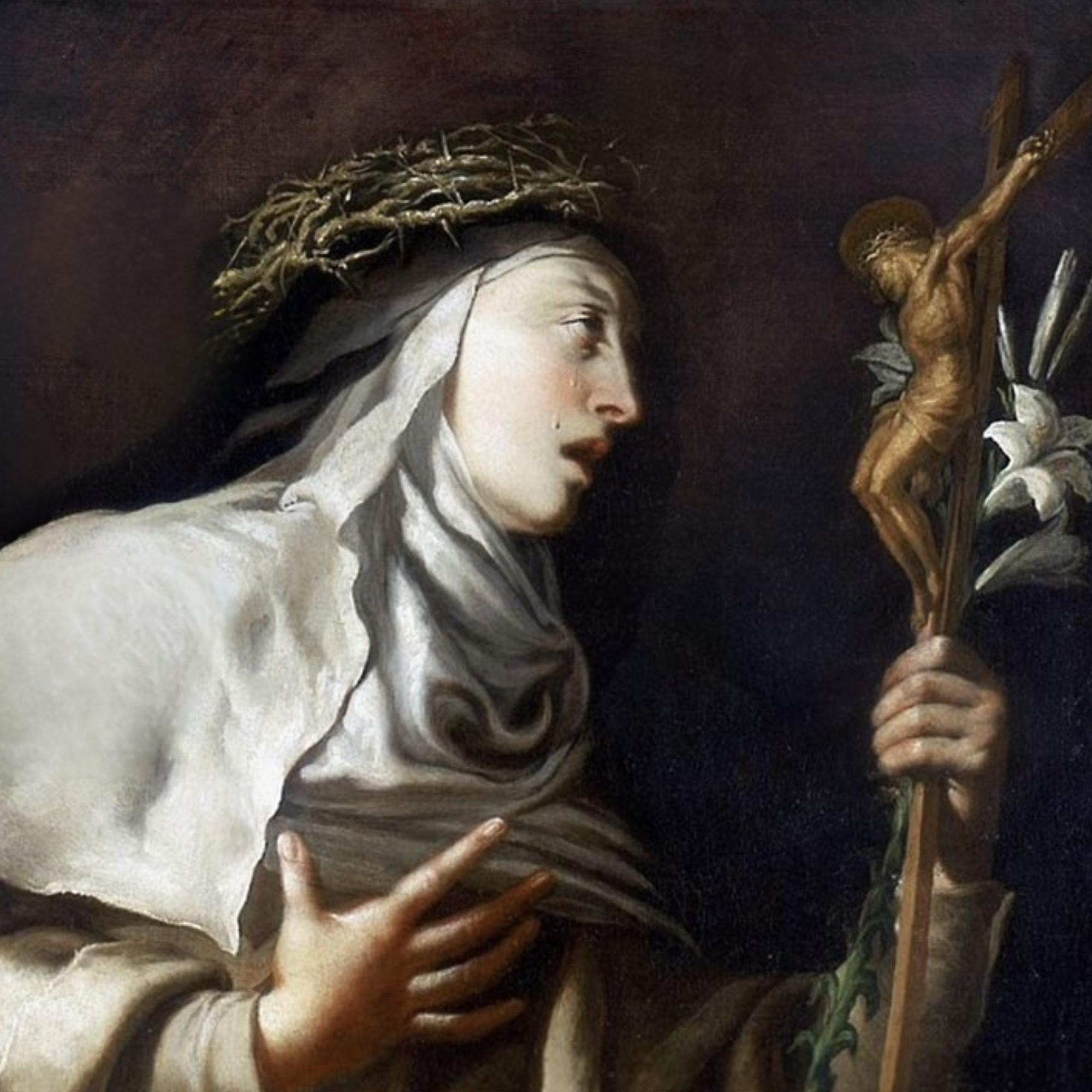
The Doctor of Prayer, St. Teresa of Avila, said that "Meditation is the basis for acquiring all the virtues and to undertake it is a matter of life and death for Christians."
Why?
Because real prayer brings us more into contact with God. It is literally our relationship with him.
Not only that, but it also allows him to move more powerfully through us.
Prayer helps us to crush our self-centered attitude and begin to put the other person first. It helps us die to our own desires and shower others with Christ-like love.
And this is a huge point.
People don’t come into, or return to the Church because they were beaten into submission through apologetic arguments, drug by the arm, or nagged to death.
They come back because of love. They come back through relationship.
I’m not sure I would have ever become Catholic had it not been for the one Catholic family I knew leading me by the hand and getting me into RCIA.
They are a wild and wooly Irish Catholic family in Chicago and I'm forever indebted to them.
And once I had moved to Steubenville and was in RCIA at Franciscan University, it was the patient care of my local RCIA sponsor Mike that helped me get over all the final hurdles that remained in the last few months before I was received into the Church.
He was, and is, the truest of friends.
This is really important to understand. I could read all kinds of books. I could come to all kinds of theological conclusions...and I did. But I’m still a human.
I still needed other humans to guide and welcome me into the Catholic family.
My point is that you simply can’t separate humanity out of the process. Our relationship with those people who are considering (or reconsidering) the Church is pivotal.
But again, we have to realize that we can’t offer others a truly loving relationship without a deeply personal relationship with Love Himself.
In other words, if we’re going to love others into relationship with the Lord, we have to already have that love, we have to have that relationship with him.
Well prayer is that relationship.
And as the saints show us so powerfully, a deep, prayerful relationship with God takes us to another level. It fuels our ascent to God.
In fact, it’s supposed to literally make us like the One we love.
As the Catechism says, “Prayer restores man to God’s likeness and enables him to share in the power of God’s love" (no. 2572). And that’s pretty much the whole goal of the spiritual life.
But here’s where things get difficult.
If the goal of the Christian life is to become like Christ and extend his love to the rest of the world as part of his Mystical Body, what does that actually look like?
Does it only consist in asking and petitioning for those living in darkness or is there more to it?
Yes, there’s more. A lot more.
And you can sum it up in one word…sacrifice.
3. Sacrifice
In fact, as we’re going to see, it’s sacrifice that puts your prayer life on steroids.
Even so, it’s a term that makes us squirm, myself included. But if you are serious about reclaiming lost souls, sacrifice is a key.
In fact, if you say you love someone and aren't willing to sacrifice for them, do you really love them?
But what do I mean by that? What do I mean by “sacrifice”?
Basically I’m talking about offering up not just our prayers, but our bodies for others?
How? Through mortification - voluntary self-denial.
And I know…the squirming just became shuddering. But hang with me.
Now why is offering our mortifying our bodies and offering penitential sacrifice for others so powerful?
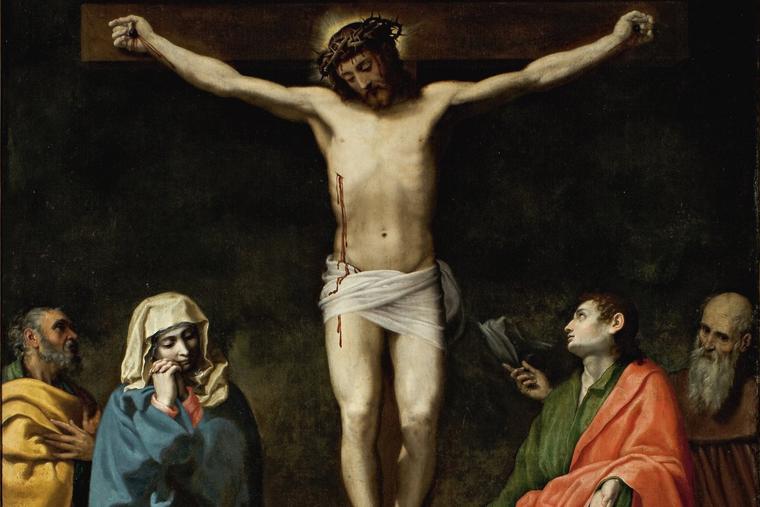
Basically it’s because when you offer yourself up in sacrifice you’re doing exactly what Christ did on the Cross for us. Yes, he prayed. Yes, he taught. But he also gave up his own body for us.
And when we offer up mortifications for those we love, we're not only imitating him, we're wielding his very power. Why? Because we're united to him through the sacraments.
Remember, we are a union of body of soul. We’re not simply spiritual beings. That means that if we’re going to truly make a gift of our full selves like Christ, our body must necessarily be involved.
Certainly there is a kind of spiritual, interior suffering we can undergo without visible bodily suffering, but I’m talking about voluntary bodily mortification and penance done out of love for the other.
It’s an act of love.
Ultimately, that’s what penance and mortification is…an act of love.
As the great Jesuit Fr. John Hardon said, “We love only to the degree that we are willing to suffer.”
In Romans 8:17, St. Paul said that we are "fellow heirs with Christ, provided we suffer with him in order that we may also be glorified with him."
Christ is always our perfect example.
He was beaten, bloodied, and crucified for us. His exterior suffering was a manifestation of his interior sacrificial love. He gave it all up – body and spirit – for us.
And we are called to do the same thing.
We’re called to offer up our whole selves – body and soul – in sacrificial love.
And it’s extremely powerful not because of us, but because we’re wielding the power of Christ.
Joined to him through the sacraments, we’re tapping into the saving power of the Cross, the ultimate source of sacrificial, saving love.
And realize that I’m not saying we have to go all “Rambo” on ourselves.
I'm not saying you have to wear don the hairiest of hair shirts or only consume bread and water the rest of your life.
In fact, I would advise against it. Pick mortifications that are sustainable.
Even small things like turning down the hot water in the shower for a minute and saying a Hail Mary, not having that second cup of coffee, eating all the cauliflower on your plate - these kind of things can be incredibly powerful...especially the cauliflower.
Why?
Because they are sacrifices driven by love for neighbor that unleash the powerful mercy of Christ. They're ways that we can participate in the suffering of Christ.
As members of his mystical Body, we’re wielding the power of his crucified and risen Body.
Of course, not only will this sacrificial love help lead others to conversion, it will lead to our salvation, as well.
As Christ told St. Catherine of Siena, “Those who are willing to lose their own consolation for their neighbors’ welfare receive and gain me and their neighbors…and so they enjoy the graciousness of my charity at all times.”
So there you go. There's our battle plan to bring our loved ones back into the arms of God:
1. Look in the mirror
2. Engage in real transformative prayer
3. And begin to offer small sacrifices in union with Christ.
These are seriously powerful means that pave the way for the Holy Spirit to penetrate the hearts of our lost loved ones and move us closer to Christ, as well.
And one final note… don’t get frustrated if things don’t happen right away. Conversion normally takes time. It's a process. Everyone has different wounds and issues.
St. John Henry Newman says that we all have what he calls "antecedent considerations" that play into all of this.
And basically that means that we all have baggage and barriers that have to be overcome so that we can move fully into, or back into, the love of God.
But as you’re waiting, praying and sacrificing, never forget that the Lord loves your loved ones even more than you do and is always showering them with powerful graces to draw them close.
In fact, he loves them so much that he gave his only child so that your children and loved ones can experience his overwhelming love for all eternity.
So give your family and friends over to Jesus and His Mother, and in even your darkest moments of anguishing over the salvation of loved ones who seem so far away from the faith, don't forget the words of Christ himself: “With men this is impossible, but with God all things are possible.”
In closing, I want to remind you that if you're wondering what a real life of prayer actually looks like and practically speaking how to do it, go check out the free Introduction to Real Prayer course at ScienceOfSainthood.com.
If you're in the United States, you can just text the word PRAY to the number 66866, enter your name and email when prompted, and we'll send you the course.
If you're a reader, check out my book Prayer Works: Getting a Grip on Catholic Spirituality. There are links to all of these in the show notes, as well.
So let's close this episode like we always do with the powerful words of St. Paul in Romans 12:12 which always are incredibly apropos to our topic. Say it with me - "Rejoice in hope. Endure in affliction. Persevere in prayer."
Check out Course #1 in the Science of Sainthood -
Introduction to Real Prayer for FREE!
Check it out HERE!
